
PuneCulture
"Curating experiences..."
No other fort is as deeply woven into Pune's soul as Sinhagad. From the sacrifice of Tanaji Malusare to the aroma of wood-fired Pithla Bhakri, it is the city's ultimate weekend pilgrimage.
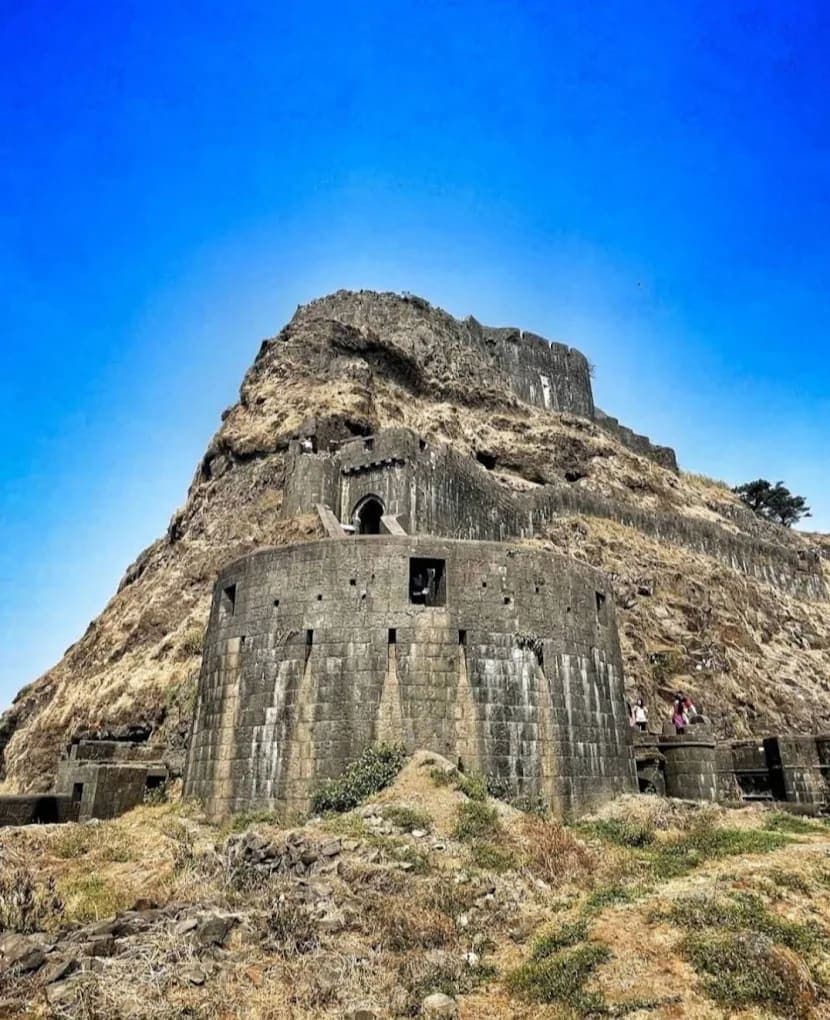
Every Puneri has a Sinhagad story. It is the fort that watches over the city — a silent stone sentinel that has witnessed the rise of empires and the morning jogs of generations.
Category: Treks | Elevation: 1,312 m | Grade: Easy
Originally known as Kondhana, the fort was renamed Sinhagad (The Lion's Fort) by Chhatrapati Shivaji Maharaj in honour of his commander, Tanaji Malusare, who died recapturing it from the Mughals in 1670. "Gad ala pan sinha gela" (The fort is won, but the lion is lost) remains one of the most poignant phrases in Maratha history.
Today, Sinhagad is more than a historical site. It is a ritual. Whether it's the 4 AM trek to catch the sunrise or the drive up for a rainy weekend, it is the most visited destination around Pune.
Among the many ancient structures on the fort, the Dev-Taaki (Divine Tank) stands out. These rock-cut cisterns are a marvel of ancient engineering, harvesting rainwater and filtering it through basalt rock to provide cold, sweet, and naturally mineral-rich water even in the height of summer.
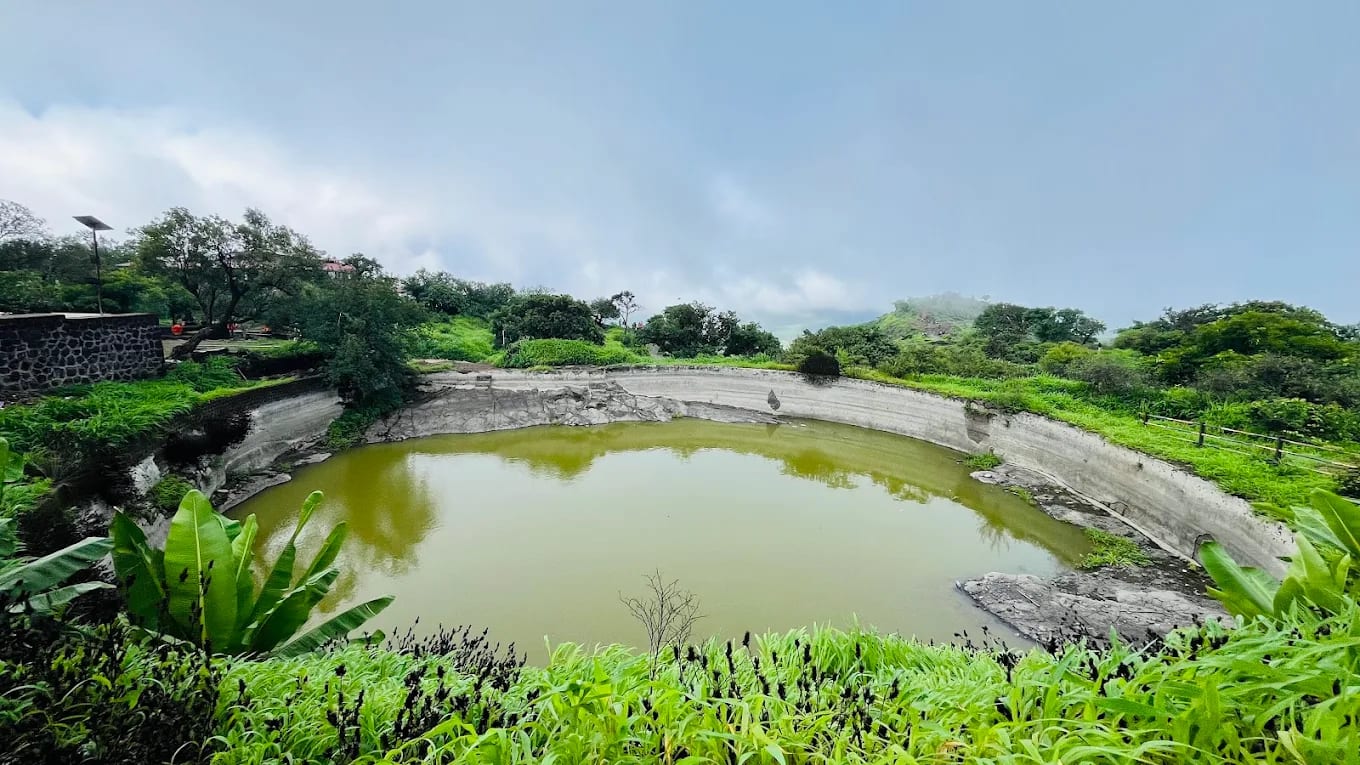
The Dev-Taaki — ancient rock-cut cisterns providing naturally cold, sweet mountain water that has quenched the thirst of warriors and trekkers for centuries.
While the history is the soul, the food is the heart of the Sinhagad experience. No visit is complete without sitting on a wooden bench under a thatched roof and eating Pithla Bhakri.
The fort is sprawling, and there is much to see beyond the main gates (Pune Darwaja and Kalyan Darwaja):
Sinhagad is not just a destination; it's a feeling. It's the taste of wood-smoke, the smell of wet earth, and the sight of your city spread out below you like a map of possibilities.
📍 Sinhagad Fort — Donje-Ghavarewadi, Pune District | Access: Trek from Atkarwadi or drive from Donje.