The Peshwa Empire: The Architects of Pune's Golden Era
How a family of prime ministers transformed Pune from a small town into the grand seat of the Maratha Confederacy.

The Peshwa Empire: The Architects of Pune's Golden Era
How a family of visionary prime ministers transformed a modest riverside settlement into the grand, buzzing de facto capital of India.
Category: History | Era: 1713–1818 | Location: Pune, Maharashtra
If the Maratha Empire under Chhatrapati Shivaji Maharaj provided the foundation of swarajya (self-rule), it was the Peshwas who built the grand architecture of its expansion. For nearly a century, from their seat at Shaniwar Wada, the Peshwas directed the affairs of the Indian subcontinent, turning Pune into a center of power, music, art, and intellectual vigor.
To understand Pune today—its 'Peths', its proud scholarship, and its royal heritage—one must understand the era when the Peshwa's word was law from the Kaveri to the Indus.
The Rise of the Prime Ministers
The word 'Peshwa' translates to 'Leader' or 'Prime Minister'. Originally an administrative role under Shivaji Maharaj, the position became hereditary and supremely powerful in 1713 with the appointment of Balaji Vishwanath.
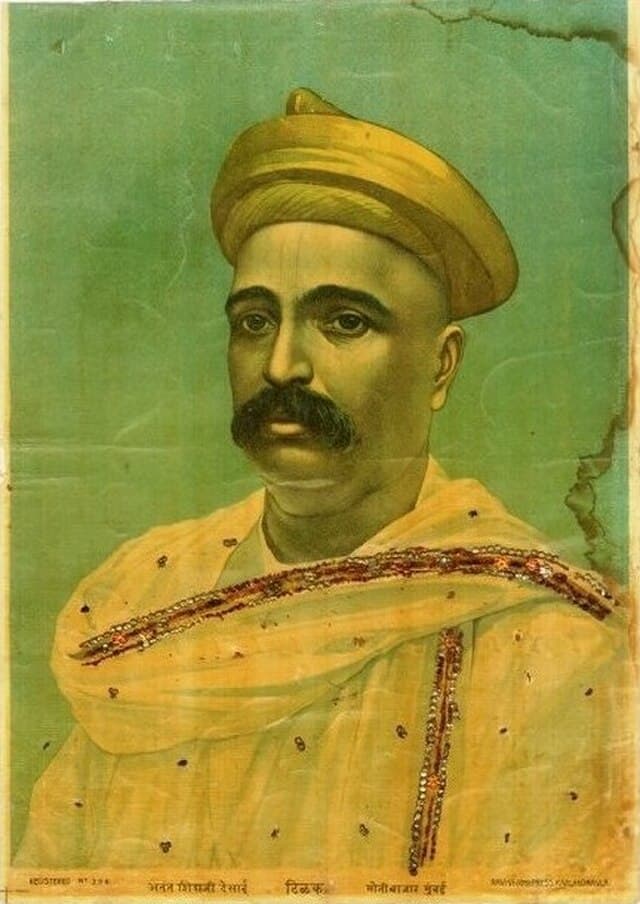
Portrait of Balaji Vishwanath, founder of the Peshwa dynasty
Portrait of Balaji Vishwanath, the first Peshwa Prime Minister. Source: Wikimedia Commons
However, it was his son, the legendary Bajirao I, who truly put Pune on the map. Known as the 'Invincible Warrior,' Bajirao never lost a battle in his short but brilliant career. It was he who moved the administrative base of the Maratha Empire from Satara to Pune in 1720, recognizing the city's strategic potential.
Shaniwar Wada: The Heartbeat of an Empire
In 1732, Bajirao I laid the foundation stone for Shaniwar Wada. What began as a residence for the Peshwa family soon became a massive fortress and a symbol of Maratha pride. Within its massive walls lived thousands—warriors, diplomats, artists, and the elite of the empire.
 The official seal of Balaji Vishwanath, the first Peshwa
The official royal seal of Balaji Vishwanath — a symbol of Peshwa sovereignty. Source: Wikimedia Commons
The palace was far more than a military outpost. It was the "cultural headquarters" of India. The Peshwas were great patrons of the arts. It was during this time that Ganesh Chaturthi (then a private celebration) and the traditions of Marathi Theatre and Classical Music began to take deep root in Pune's soil.
The Layout of Pune: The 'Peth' System
Walk through central Pune today and you'll find yourself in a 'Peth'—Shaniwar Peth, Sadashiv Peth, Nana Peth. This unique urban layout is a direct legacy of the Peshwas.
Each Peshwa and their ministers (Sardars) established new wards or 'Peths' to encourage trade and settlement.
- Sadashiv Peth: Established by Sadashivrao Bhau, it became the hub of intellectual and scholarly life.
- Nana Peth: Established by Nana Phadnavis, it was a thriving grain market.
- Raviwar Peth: The commercial heart for jewelry and gold.
This structured development transformed Pune from a rural town into a sophisticated urban center, a model of town planning for its time.
The Legacy of Scholarship
The Peshwas placed a special emphasis on education and Sanskrit scholarship. They established 'Pathshalas' and supported learned Brahmins, earning Pune the title of 'The Oxford of the East' long before the British colonial education system arrived. This tradition of learning is why Pune remains India's premier educational hub today.
"Under the Peshwas, Pune became a city where a sword was valued, but a pen was revered equally."
The Fall of 1818
All empires rise and fall. The Peshwa era came to an end in 1818 following the Battle of Khadki, where the British East India Company defeated the forces of Bajirao II. The saffron flag atop Shaniwar Wada was lowered, and the Union Jack was raised.
Yet, while the political power faded, the cultural imprint was indelible. The British did not build over Pune; they built around it, creating the Pune Cantonment (Camp) while leaving the Peths to preserve their Maratha soul.
Exploring the Peshwa Legacy Today
If you wish to walk in the footsteps of the Peshwas, start here:
- Shaniwar Wada: The ruins tell the silent story of past glory.
- Parvati Hill: The private temple of the Peshwa family, offering the best view of the city they built.
- Nana Wada: A beautifully preserved example of Peshwa-era architecture and woodwork.
- Raja Dinkar Kelkar Museum: Houses thousands of artifacts from this golden age.
The Peshwa era was more than just a political timeline. It was the birth of Pune as we know it—a city that continues to lead through both tradition and transformation.
🏛️ Peshwa Heritage Circuit — Central Pune (Peth Areas)
📖 Recommended Reading: Chronicles of the Peshwas by various historians.