
Skip to content
PuneCulture · Heritage Series · The British Era

Pune · 1818 → 1947

The BritishEra of Reform

Scroll

Introduction · The British Era

When the British flag was raised over Shaniwar Wada in 1818, Pune did not stop being a capital. It simply transformed into a capital of ideas. Over the next 130 years, it would become the site of India\'s most radical social reforms and the epicenter of revolutionary unrest.

Colonial order met Marathi defiance.

This is the story of how Pune became the heart of India's awakening.
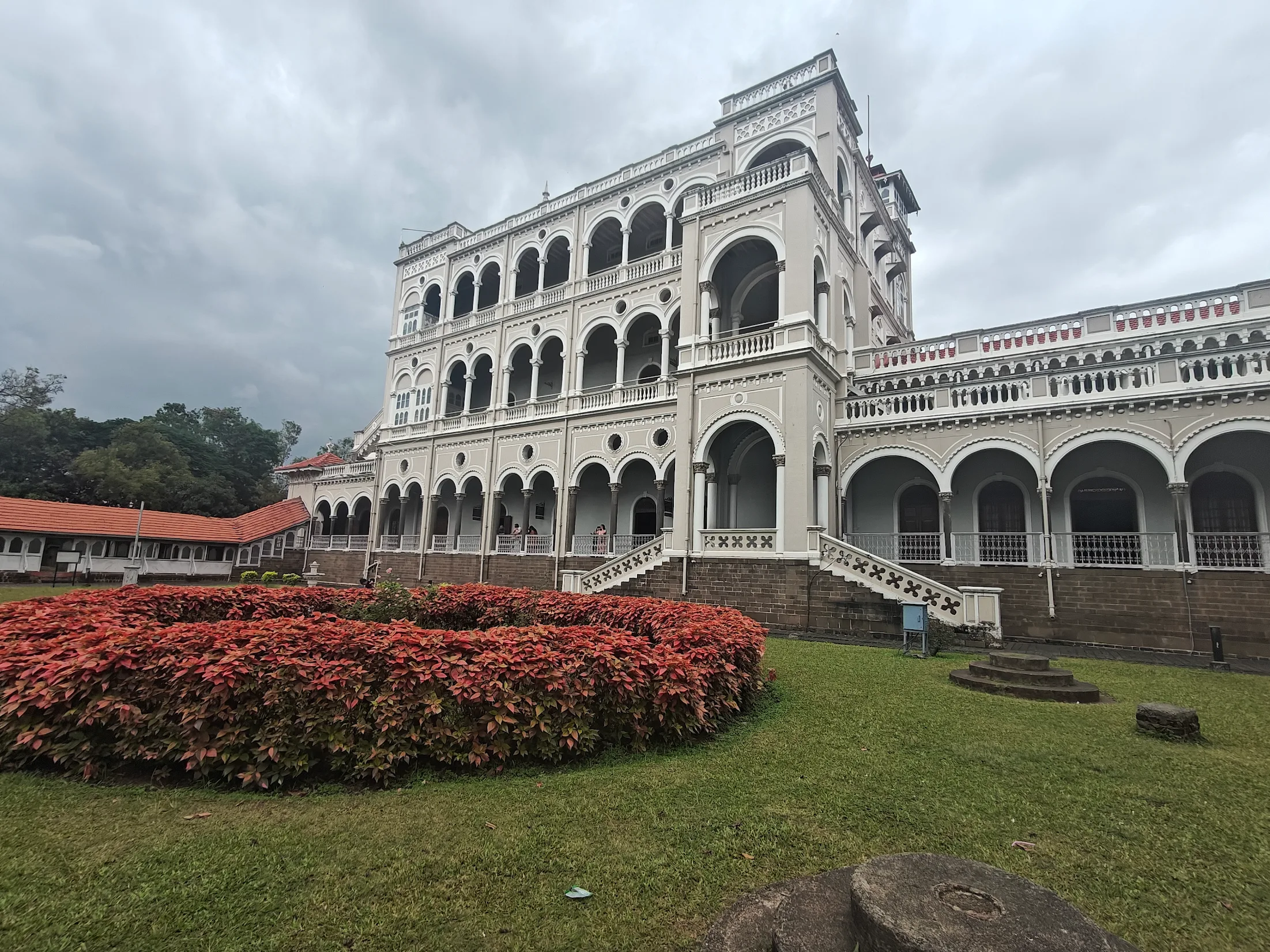
Aga Khan Palace — the site of Gandhi's detention in Pune

A Monument of Detention

Aga Khan Palace —
Winter 1942

1818
A Flag Changed
British Rule Begins
1848
Phule's School
Education for Everyone
1893
Ganeshotsav
Uniting Pune in Defiance
1947
Dawn of Freedom
Independence Achieved

Historical Milestones

Six Chapters of Global Awakening

01
1818

The Last Saffron Flag

In November 1817, the Battle of Khadki changed Pune forever. The British East India Company defeated the armies of the last Peshwa, Bajirao II. By June 1818, the Union Jack replaced the Maratha saffron flag atop Shaniwar Wada, marking the definitive end of Maratha rule and the dawn of Pune as a key British administrative and military hub.

01
02
1848

The First Spark of Education

In a small wada in Pune, a revolution began. Mahatma Jyotirao Phule and Savitribai Phule opened India's first school for girls in Bhide Wada. They faced intense social opposition, yet they persisted, turning Pune into the epicentre of social reform that challenged caste and gender barriers long before the freedom struggle reached its peak.

02
03
1853

The Iron Horse Arrives

The geography of Pune was permanently altered when the Great Indian Peninsular Railway connected it to Mumbai. The Bhor Ghat incline, an engineering marvel of the 19th century, brought the industrial world to the Deccan. Pune transformed from a quiet residency into a bustling railway junction of colonised India.

03
04
1893

A Festive Rebellion

Lokmanya Bal Gangadhar Tilak, a firebrand from Pune, recognised that religious gatherings could not be easily banned by the British. He transformed the private Sarvajanik Ganeshotsav into a public festival of unity and sedition. He used poetry, theater, and speeches to ignite the nationalist spark in every peth of Pune.

04
05
1932

The Poona Pact

Within the high walls of Yerawada Jail, two giants of Indian history — Mahatma Gandhi and Dr. B.R. Ambedkar — signed the historic Poona Pact. This agreement regarding political representation for Dalits shaped the social and political future of modern India, making Pune a pivotal site for social justice dialogue.

05
06
1942

The Final Prison

After the Quit India Movement was launched, the British detained Mahatma Gandhi, Kasturba Gandhi, and Mahadev Desai at the Aga Khan Palace. This elegant palace in Yerawada became a silent witness to the final decade of the struggle for independence, cementing Pune's role in the birth of a free nation.

06

Auto-scrolling · Hover or tap to pause

Swarajya is My Birthright

"I shall have it.
Freedom is not given, it is taken."

— Lokmanya Tilak, Kesari Office, Pune

Reforms · 1848

The House of Learning: Mahtama Phule

While the British built barracks, the Phules built schools. In the narrow lanes of Bhide Wada, Jyotirao and Savitribai opened India's first school for girls. It was a declaration of war against inequality. Despite being pelted with stones and mud as she walked to class, Savitribai taught a new generation of women that education was the ultimate weapon of liberation. Pune became the cradle of a modern, equal India.

Revolution · 1893

Lokmanya: The Father of Indian Unrest

In 1893, Bal Gangadhar Tilak brought God into the streets to fight an Empire. He took the domestic festival of Ganesh Chaturthi and made it public. He knew the British could not easily ban religious gatherings. Under the guise of worship, Pune's peths came alive with seditious poetry, nationalist debate, and a shared sense of defiance. His newspaper, Kesari, published from Narayani Peth, became the voice of 'unrest' that shook London.

A Legacy of Defiance

The British Built Pune.
But Pune Defeated
their Empire.

From the military bungalows of Camp to the narrow revolutionary alleys of Kasba, the duality of Pune still lives on. We carry the education of Phule, the defiance of Tilak, and the justice of Ambedkar in every step we take toward the future.