
PuneCulture
"Curating experiences..."
Discover how Bal Gangadhar Tilak transformed a quiet, domestic worship ritual of Lord Ganesha into a roaring public movement for India's freedom struggle.
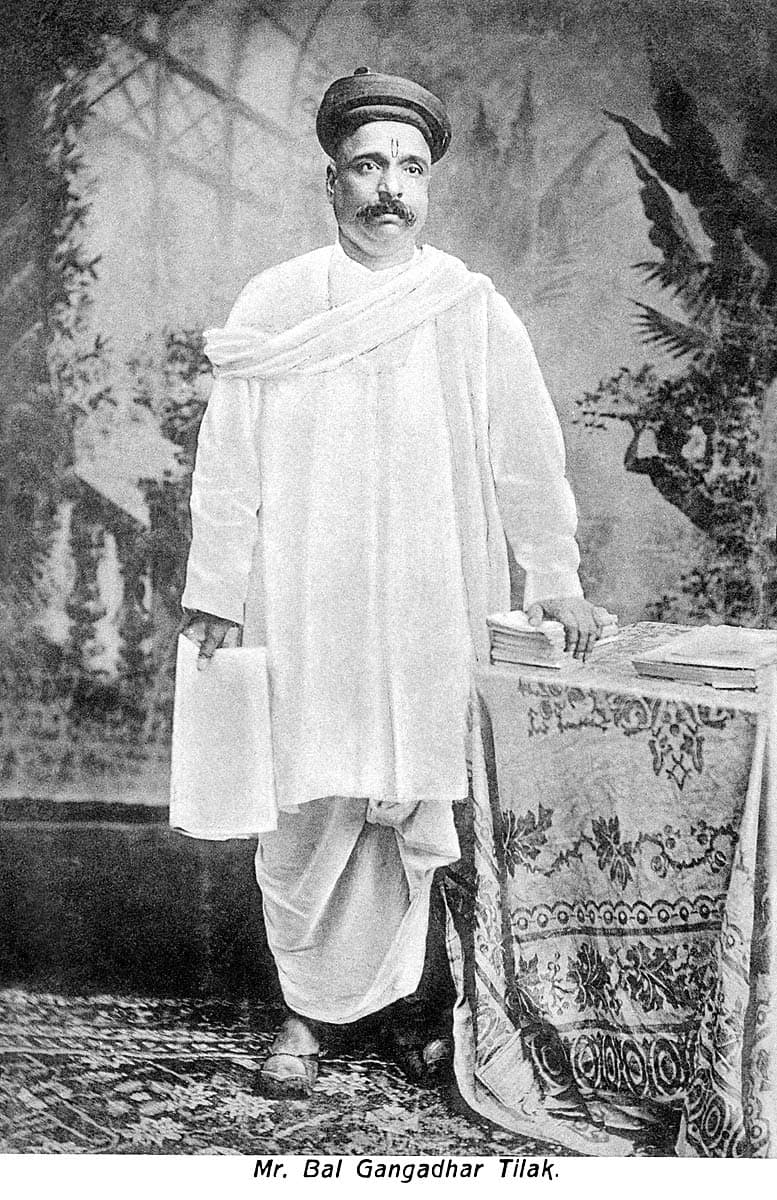
In the closing years of the nineteenth century, colonial India was a land under tight political control. Public assembly was restricted, dissent was crushed, and any organized gathering of Indians was viewed with suspicion by the British administration. Yet, in the bustling city of Pune, a visionary leader found an ingenious way around these restrictions — not through arms or open rebellion, but through a god. Bal Gangadhar Tilak, popularly revered as "Lokmanya" (accepted by the people as their leader), transformed a quiet, domestic worship ritual into a roaring public movement. This is the story of how the private worship of Lord Ganesha became a public festival, and how that festival became one of the most powerful tools of India's freedom struggle.
Born in 1856 in Ratnagiri, Maharashtra, Tilak was a scholar, mathematician, lawyer, and journalist who emerged as one of the fiercest early voices for complete Indian self-rule, or "Swaraj." His famous declaration, "Swaraj is my birthright, and I shall have it," became a rallying cry for a generation of freedom fighters. Unlike many of his contemporaries in the Indian National Congress who favored gradual, constitutional reform, Tilak believed in mass mobilization — bringing ordinary people, not just the educated elite, into the fold of the independence movement. This belief was the seed from which the public Ganesh festival grew.
By the 1890s, the British colonial government had grown increasingly wary of any large gatherings of Indians. Political meetings were monitored, restricted, or banned outright under laws meant to prevent organized resistance. Tilak recognized a critical challenge: how do you unite people, spread nationalist ideas, and build solidarity across caste and class lines when the very act of gathering is suppressed?
He also observed a deeper social problem. Indian society at the time was fractured along caste lines, and this fragmentation weakened any collective resistance to colonial rule. Tilak needed a unifying force — something that could bring Brahmins and non-Brahmins, the rich and the poor, together under one banner without arousing immediate suspicion from the authorities.
Tilak's answer was both simple and brilliant. Ganesh Chaturthi — the festival honoring Lord Ganesha, the remover of obstacles — had traditionally been a private, family-based celebration observed within homes across Maharashtra. In 1893, Tilak transformed this personal ritual into a grand, community-wide public festival, known as "Sarvajanik Ganeshotsav."
Because it was a religious festival, the British could not easily ban it without provoking widespread religious backlash. Under the guise of devotion, Tilak created a legitimate, sanctioned space where thousands of Indians — regardless of caste or class — could gather publicly for ten days each year.
Public pandals (temporary shrines) were erected in neighborhoods across Pune and later throughout Maharashtra. Large, beautifully crafted idols of Ganesha were installed for public worship, and the festival culminated in a mass public procession leading to the immersion of the idol, known as "Visarjan."
What made Tilak's Ganeshotsav revolutionary was not simply that it gathered people — it was what happened once they gathered. The festival pandals became stages for:
Tilak used his newspapers, "Kesari" (in Marathi) and "Mahratta" (in English), to further amplify the festival's message, reporting on the celebrations and using them as a platform to critique British policy.
One of Tilak's central goals was social integration. Traditional Ganesh worship, especially among Brahmin households, had been relatively exclusive. By making the festival public and communal, Tilak deliberately encouraged participation from non-Brahmin communities as well. The pandals became rare spaces where social hierarchies were, at least temporarily, set aside in favor of a shared cultural and religious identity — one that could be channeled into a broader sense of Indian nationhood.
This strategy reflected Tilak's broader political philosophy: that true resistance to colonial rule required not just political agitation among the elite, but the active participation of the masses.
What began in Pune quickly spread across the Bombay Presidency and beyond. Within a few years, the Sarvajanik Ganeshotsav had become a fixture of public life throughout Maharashtra, and its influence extended to other parts of India as nationalist sentiment grew. The festival model — using religious and cultural occasions as vehicles for political mobilization — would later be echoed in other movements across the country.
The colonial government did not remain oblivious to the political undertones of the festival for long. Tilak's fiery writings and speeches, often delivered in the context of festival gatherings, drew the ire of British authorities. He was tried multiple times for sedition, most notably in 1897 and again in 1908, when he was sentenced to six years of imprisonment in Mandalay, Burma. Far from silencing him, these persecutions only cemented his status as a martyr-like figure and a "Lokmanya" — one accepted and revered by the people.
More than a century later, Ganesh Chaturthi remains one of India's largest and most vibrant public festivals, especially in Maharashtra, where it is celebrated with enormous public pandals, elaborate idols, and processions that draw millions of participants. While the overt political messaging of Tilak's era has faded into the background, the essential character he gave the festival — a public, communal, unifying celebration — endures as his lasting legacy.
Tilak's transformation of Ganesh Chaturthi stands as a remarkable example of political ingenuity: using culture and religion not to divide, but to unite, and turning a moment of devotion into a movement for freedom. It remains one of the most creative and enduring strategies in the history of India's struggle for independence.
Bal Gangadhar Tilak's public Ganeshotsav was far more than a religious innovation — it was a masterstroke of political strategy that reshaped how mass movements could be organized under colonial constraints. By turning a private ritual into a public celebration, he created a space where nationalism could grow in plain sight, protected by the sanctity of faith. In doing so, Tilak didn't just honor a god who removes obstacles — he used that very festival to help remove the obstacles standing between India and its freedom.