Pune's Ganesh Chaturthi: The World's Largest Public Festival
For 11 days every August-September, Pune transforms into the world's most spectacular public festival — with over 3,000 mandals, processions that last all night, and a joy that is truly contagious.

Pune's Ganesh Chaturthi: The World's Largest Public Festival
For 11 days, two million people become one — united by drumbeats, devotion, and the humble offering of a modak.
Category: Festivals | Duration: 11 Days | Season: August–September
Ganeshotsav — the public celebration of Ganesh Chaturthi — is the single most spectacular cultural event in India. And it was born in Pune. When Bal Gangadhar Tilak transformed the private household puja into a mass public gathering in 1893, he could not have imagined that 130 years later, over 3,000 mandals (community organisations) in Pune alone would be installing idols; that the Lalbaugcha Raja in Mumbai would draw lines stretching kilometres; or that the festival would last 11 days, ending in a procession through the night that does not finish until sunrise.
The Visarjan: Night of Nights
The final night of Ganeshotsav — Anant Chaturdashi — is unlike anything else in the world. Across Pune, thousands of processions begin converging on the main arteries. Dhol-tasha bands pound their rhythms. Floats carry massive Ganesh idols. Lezim dancers move in choreographed formations. The procession at Kasba Ganpati, Pune's city patron idol, is often led by the Chief Minister.
By the riverbanks at dawn, idols are immersed in a moment of collective catharsis — a god departing, with the promise to return next year.
The Five Manacha Ganpatis
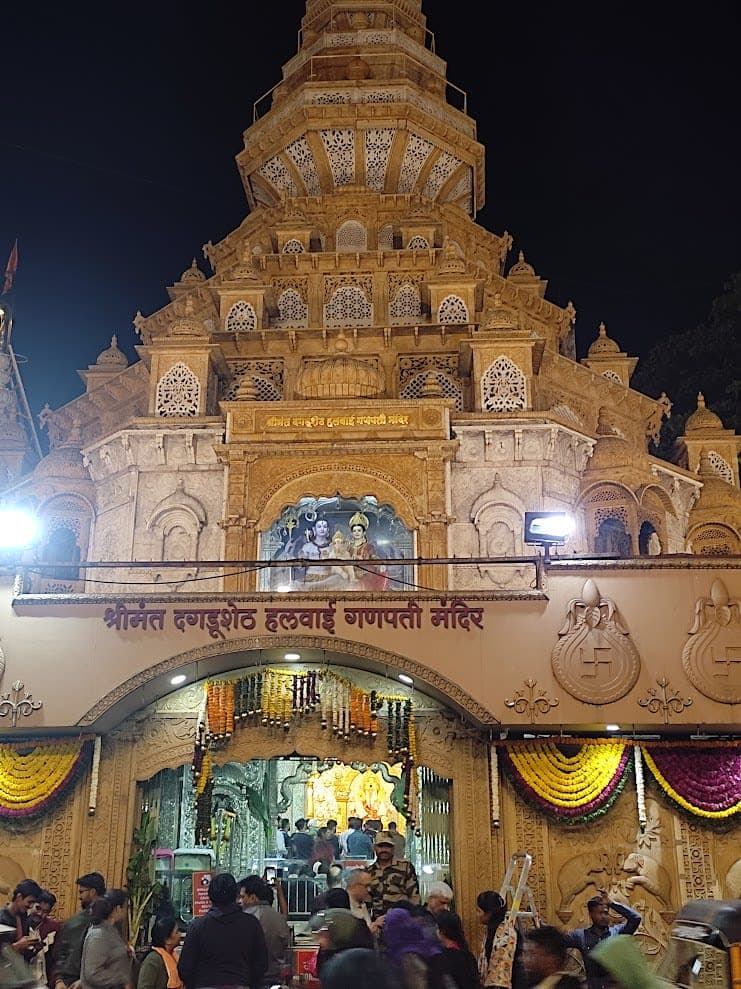
Pune has five Manacha (honorable) Ganpati mandals whose idols receive the highest public honor during the procession. In order: Kasba Ganpati (Kasba Peth), Tambdi Jogeshwari (Budhwar Peth), Guruji Talim (Budhwar Peth), Tambat Ali (Rasta Peth), and Kesariwada (Narayan Peth).
Ganesh Chaturthi in Pune is not a spectacle you observe. It is one you get absorbed into — and you are richer for it.